The Shocking Truth About Toxic Chemicals the U.S. Allows and Why DermHairDoc® Is the Antidote
Dermatologist-Developed | Dermatologist-Tested | Dermatologist-Approved
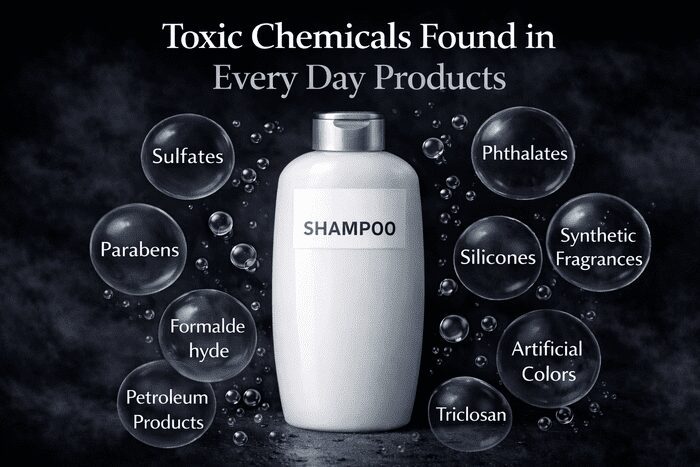
Every morning, millions of Americans reach for their shampoos, conditioners, and hair masks without a second thought. We lather, rinse, and style trusting that what’s on the shelf is safe. But here’s what the beauty industry doesn’t want you to know: the United States allows hundreds of chemicals in personal care and hair products that are outright banned in the European Union and Canada.
While the EU has banned or restricted over 1,600 chemicals from cosmetics and Canada has banned hundreds more, the United States FDA has banned fewer than 12. That’s not a typo. Fewer than twelve.
The hair products you use daily: relaxers, conditioners, shampoos, styling creams and may contain ingredients linked to hormone disruption, cancer, reproductive toxicity, and scalp inflammation. And the label? It might say ‘natural,’ ‘moisturizing,’ or even ‘gentle.’ But the ingredient list tells a very different story.
A Tale of Three Regulations: U.S. vs. Canada vs. the EU
The United States: Beauty’s Wild West
The United States Federal Food, Drug, and Cosmetic Act (FD&C Act), last significantly updated in 1938, gives the FDA very limited authority over cosmetic safety. Unlike pharmaceuticals, cosmetics do not require pre-market approval. Companies are largely left to regulate themselves. The result? A marketplace flooded with products containing chemicals that scientific research has linked to serious health risks chemicals that are simply not permitted in other developed nations.
The Modernization of Cosmetics Regulation Act (MoCRA), signed in 2022, was a step forward, but it still leaves significant gaps compared to international standards. The FDA still cannot recall a cosmetic product without going through lengthy legal proceedings.
Canada: A Step in the Right Direction
Health Canada, through its Cosmetic Ingredient Hotlist, prohibits or restricts hundreds of ingredients in personal care products. Canada bans lead acetate in hair dyes, restricts parabens, and has taken action on cyclosiloxanes (D4) that linger in waterways and the human body. While not as comprehensive as EU regulations, Canada’s approach is significantly more protective than the U.S.
The European Union: Setting the Gold Standard
The EU Cosmetics Regulation (EC) No 1223/2009 is the global benchmark. It prohibits over 1,600 substances and restricts hundreds more. The EU applies a ‘precautionary principle’ if there is reasonable scientific concern that an ingredient may be harmful, it is restricted or banned, even if absolute proof hasn’t been established. This is the opposite of the U.S. approach, which typically requires proof of harm before acting.
The Chemical Comparison: What’s Banned and What’s Not
The following table highlights key chemicals commonly found in hair and personal care products, and how each country regulates them. Key: ⚠️ Allowed / 🚫 Banned or Restricted.
| Chemical / Ingredient | US Status | Canada Status | EU Status | Found In |
|---|---|---|---|---|
| Formaldehyde & Releasers | ⚠️ Allowed | ⚠️ Restricted | 🚫 Banned | Keratin treatments, relaxers |
| Phthalates (DBP, DEHP) | ⚠️ Allowed | 🚫 Banned (cosmetics) | 🚫 Banned | Fragrances, hair sprays |
| Parabens (propyl, butyl) | ⚠️ Allowed | ⚠️ Restricted | 🚫 Banned | Conditioners, shampoos |
| Coal Tar Dyes | ⚠️ Allowed (some) | ⚠️ Restricted | 🚫 Mostly Banned | Hair dyes, color treatments |
| Lead Acetate | ⚠️ Allowed | 🚫 Banned | 🚫 Banned | Progressive hair dyes |
| Triclosan | ⚠️ Allowed (limited) | ⚠️ Restricted | 🚫 Banned | Antibacterial shampoos |
| Sodium Lauryl Sulfate (SLS) | ⚠️ Allowed | ⚠️ Allowed (limited) | ⚠️ Restricted | Shampoos, foaming products |
| Mineral Oil (petroleum) | ⚠️ Allowed | ⚠️ Allowed | ⚠️ Restricted (refined only) | Hair oils, pomades |
| Oxybenzone | ⚠️ Allowed | ⚠️ Allowed | 🚫 Banned | UV protection sprays |
| Styrene | ⚠️ Allowed | ⚠️ Allowed | 🚫 Banned | Hair sprays, fixatives |
| Benzophenone | ⚠️ Allowed | ⚠️ Allowed | 🚫 Banned | UV-protecting hair products |
| Cyclosiloxanes (D4/D5) | ⚠️ Allowed | 🚫 Banned (D4) | 🚫 Banned (rinse-off) | Silicone-based conditioners |
Sources: EU Cosmetics Regulation Annex II/III, Health Canada Cosmetic Ingredient Hotlist, FDA Prohibited & Restricted Ingredients List, EWG Skin Deep Database.
Why This Matters for Your Scalp and Hair Health
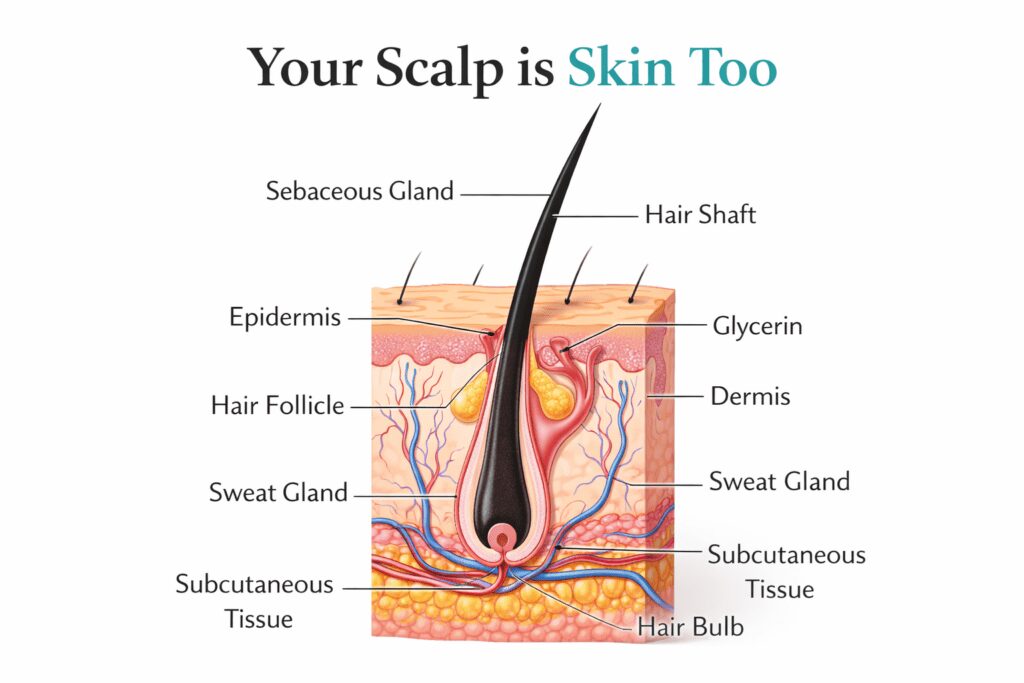
Your scalp is not just a surface, it is living skin. It absorbs what you put on it. The scalp’s rich blood supply means chemicals in your hair products don’t just sit on top of your head. They can enter your bloodstream.
Studies have linked certain chemicals in hair relaxers and dyes, particularly those containing formaldehyde-releasing agents and endocrine-disrupting compounds: to increased rates of uterine fibroids, hormonal imbalances, and scalp inflammation. A landmark 2022 study published in the Journal of the National Cancer Institute found that women who used hair-straightening products more than four times per year had more than double the risk of uterine cancer compared to those who never used such products.
For Black women and men, who are statistically the most frequent users of chemical hair products, the stakes are even higher. The beauty industry has long marketed products specifically to communities of color that contain some of the most concerning chemical profiles on the market.
This is not a small problem. It is a public health crisis dressed up in beautiful packaging.
Enter DermHairDoc®: The Antidote to a Toxic Industry
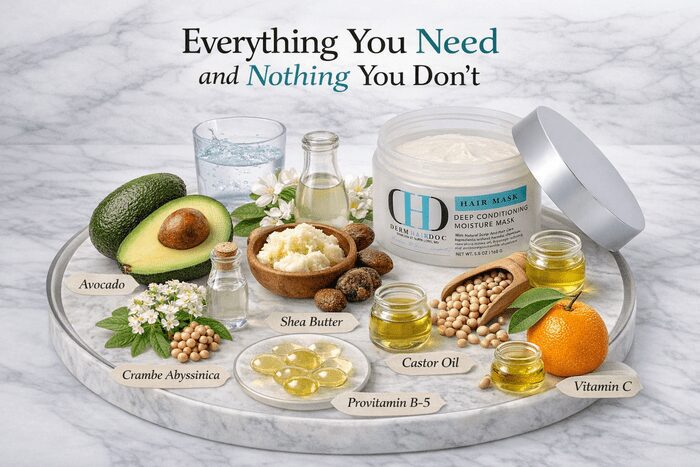
DermHairDoc® was not born in a marketing boardroom. It was built in a medical practice, guided by science, and shaped by a principle that has been foundational to medicine for centuries:
‘First, do no harm.’
While the rest of the hair care industry was chasing trends, DermHairDoc® pioneered what is now known as the ‘Skinification of Hair Care’ a philosophy that treats the scalp with the same biological precision and clinical care applied to the skin on your face and body.
Every ingredient in every DermHairDoc® formulation was selected not for what it adds to a marketing campaign, but for what it does at the cellular level. If it doesn’t heal, it doesn’t belong.
What ‘All-Natural’ Actually Means at DermHairDoc®
The word “natural” has been weaponized by the beauty industry. It appears on products that still contain parabens, synthetic fragrances, sulfates, and phthalates. DermHairDoc® operates under a stricter definition: one informed by dermatological science, not marketing language.
DermHairDoc® formulations are:
- Free from phthalates — plasticizers linked to hormonal disruption.
- Free from harsh sulfates — which strip the scalp’s natural moisture barrier
- Free from synthetic fragrances — a common hidden source of allergens and irritants
- Free from parabens — preservatives that mimic estrogen in the body
- Free from formaldehyde and formaldehyde-releasing agents
- Formulated with ingredients that meet or exceed EU cosmetic safety standards
DermHairDoc® doesn’t just avoid the bad. It actively includes ingredients with proven clinical benefit: shea butter for moisture retention, jojoba oil for scalp barrier support, crambe abyssinica seed oil for breakage reduction, and panthenol (a form of vitamin B5 – for hair elasticity and strength).
In a Class by Itself: The DermHairDoc® Difference
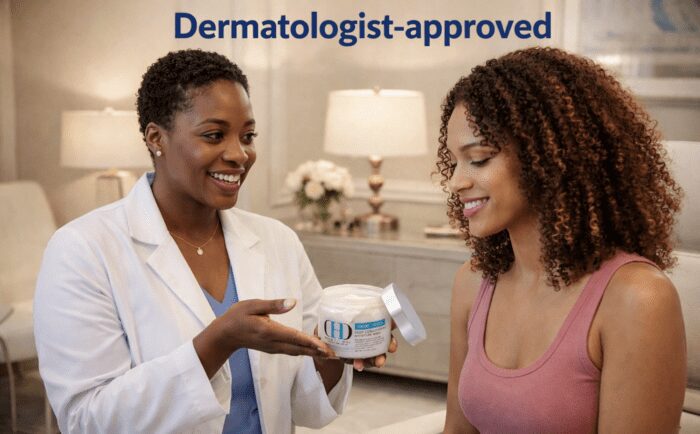
Anyone can claim their product is ‘clean’ or ‘dermatologist-recommended.’ DermHairDoc® holds itself to a different standard entirely because DermHairDoc® wasn’t recommended by a dermatologist. It was created by one.
✦ Dermatologist-Created: DermHairDoc® formulations were developed from the ground up by a board-certified dermatologist who understood that scalp health is skin health — and that most of the industry had it completely wrong.
✦ Dermatologist-Tested: Every product has been tested under clinical conditions — not just on willing influencers or focus groups, but with the rigorous evaluation applied in a dermatological practice.
✦ Dermatologist-Approved: DermHairDoc® meets the approval standards of a practicing dermatologist — standards informed by medical literature, patient outcomes, and clinical evidence, not trend reports.
This is not a celebrity-backed beauty brand. This is not a wellness influencer’s side project. DermHairDoc® is medical-grade hair care: accessible, effective, and built without compromise.
The beauty industry created a problem. DermHairDoc® created the solution.
Level Up Your Hair Care Routine
Everything you need. Nothing you don’t.
You now understand what’s really in most hair products. You know what’s banned in Europe and Canada that’s still on American shelves. You know what ‘natural’ really should mean — and what it actually does mean when it comes from a board-certified dermatologist.
Your scalp deserves better. Your hair deserves better. You deserve better.
DermHairDoc® Deep Conditioning Moisture Mask is available now. Phthalate-free. Fragrance-free. Dermatologist-Created, Tested, and Approved. Built on the principle that has guided medicine for centuries: First, do no harm.
FAQs
Q: What chemicals in hair products are banned in the EU but allowed in the US?
The EU bans over 1,600 chemicals from cosmetics. In the U.S., the FDA has banned fewer than 12. Chemicals like phthalates, formaldehyde-releasing agents, coal tar dyes, and resorcinol are restricted or banned in the EU but remain legal in American hair products.
Q: What is the skinification of hair care?
Skinification of hair care refers to applying the same biological science used in skincare to hair and scalp health — treating the scalp as skin rather than just a surface. DermHairDoc® pioneered this approach.
Q: Is DermHairDoc® safe for sensitive scalps?
Yes. DermHairDoc® is phthalate-free, fragrance-free, paraben-free, and formulated without harsh sulfates. It was created by a board-certified dermatologist for scalp and hair health.
Q: What does ‘dermatologist-approved’ mean for a hair product?
Dermatologist-approved means the product has been clinically evaluated by a licensed dermatologist and meets standards for safety and efficacy — not just recommended by one. DermHairDoc® goes further: it is Dermatologist-Created, Tested, and Approved.
Q: What are the best natural ingredients in a deep conditioning hair mask?
The most clinically effective natural ingredients include shea butter (moisture retention), jojoba oil (scalp barrier support), crambe abyssinica seed oil (breakage reduction), and panthenol/vitamin B5 (elasticity and strength). All are found in DermHairDoc®.
Q: Can a hair mask help with hair loss?
Yes. A properly formulated hair mask that supports scalp health, reduces breakage, and strengthens the hair follicle environment can help address hair loss caused by damage, dryness, and scalp inflammation. DermHairDoc® targets these causes at the biological level.
Also available on TikTok Shop. Visit our store at dermhairdoc.store
Follow us on TikTok and shop directly in-app for exclusive offers.